

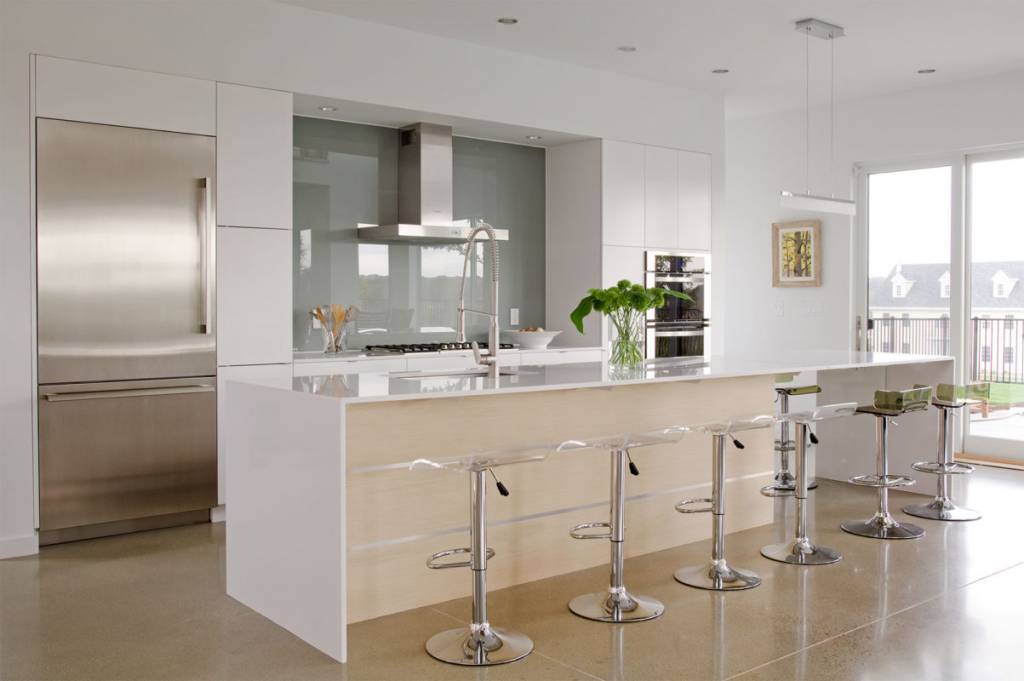
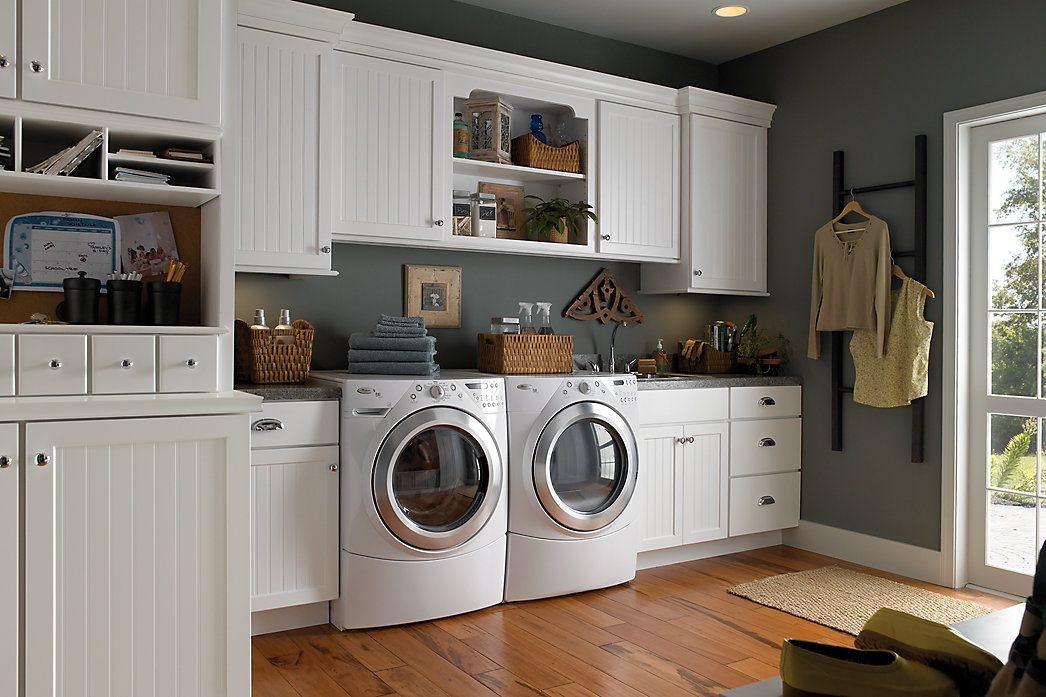
If you spend five minutes on Instagram or Pinterest looking at kitchen design, you’ve seen it: that flawless, pale, perfectly uniform Rift White Oak kitchen. It looks serene, modern, and effortless. But here is the reality check that most social media posts won’t give you: Wood is a living material with inherent variability from piece to piece.
Rift White Oak is prized for its straight, tight grain, which avoids the “cathedral” arches found in plain-sawn oak. However, even within this specific cut, nature dictates the color. A single white oak tree can have heartwood (the center) that ranges from wheat-colored to dark brown, and sapwood (the outer ring) that is nearly white.
When you ask for “natural wood,” you are asking for variety. That is the beauty of the material. It tells a story of the soil, the seasons, and the growth of the tree.
The “Instagram Effect” and the Cost of Perfection
So, how do those designers achieve that “perfect” uniform look on social media? They pay for selection.
To get a kitchen where every single door and drawer front matches perfectly in color and tone, a mill might have to buy 300% or 400% more lumber than is needed. They sift through the pile, pick the few boards that are identical in color, and discard or downgrade the rest.
You aren’t just paying for the wood on your cabinets; you are paying for the wood that didn’t make the cut. This process is called “culling,” and it is the single biggest driver of cost in high-end millwork.

Example of a grain-and-tone-matched Rift White Oak kitchen
Four Ways to Buy the “Rift White Oak” Look
To help you decide what matters more to you—uniformity, durability, or budget—here are the four ways to get the Rift White Oak look, from the most natural to the most refined.
1. Character Grade (Real Wood)
Cost Multiple: 1.0x (Base Price)
This is wood in its most honest form. It features the full range of the tree’s personality. You will see color shifts from blonde to light brown, mineral streaks, and small pin knots.
- The Look: Organic, rustic, and textured. Darker stains are recommended to mellow the variability. It looks like real wood.
- The Reality: If you expect a uniform beige box, you will hate this. If you want warmth and authenticity, this is the best value.
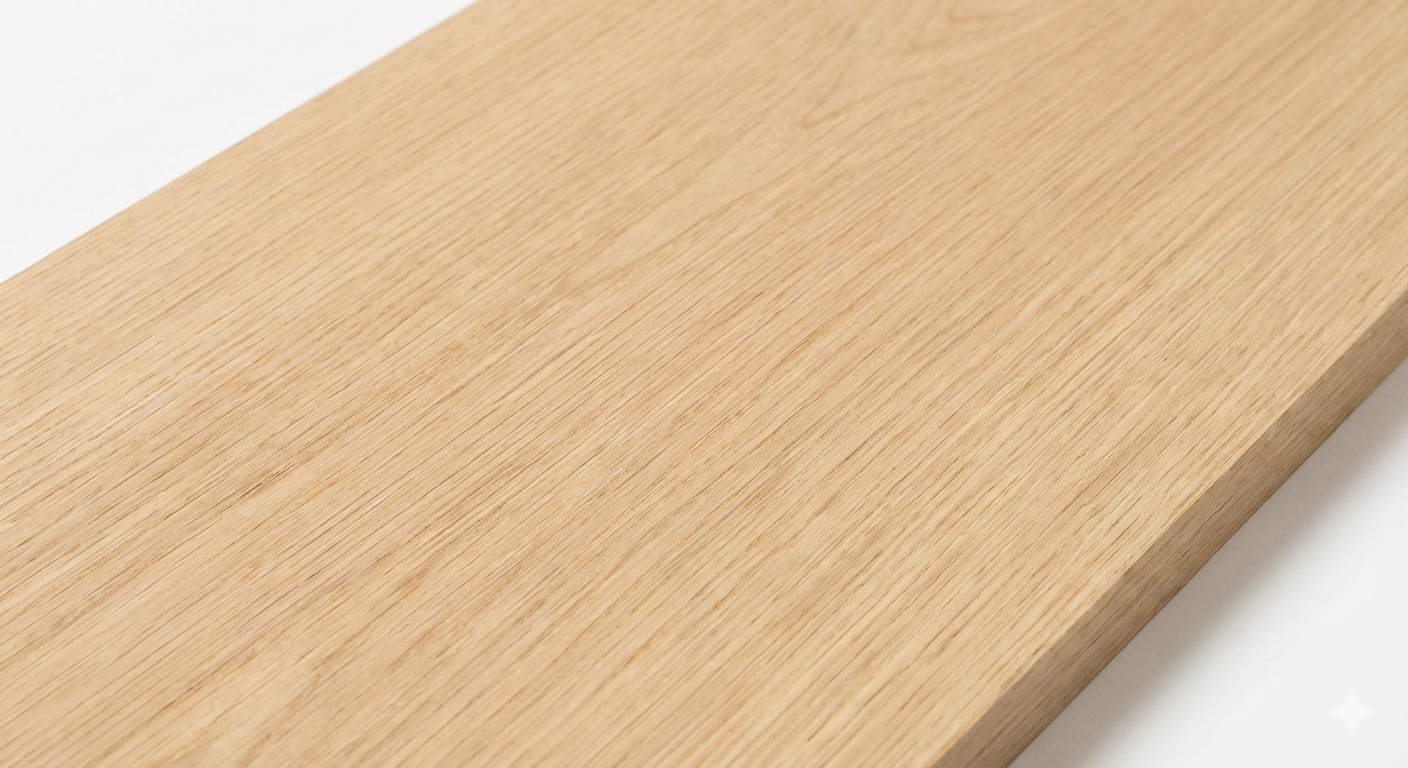
Example of a Rift White Oak solid wood plank
2. Select Grade (Real Wood)
Cost Multiple: 1.5x – 1.8x
This is the standard for most high-quality custom cabinetry. The lumber is graded to remove major defects like large knots and sapwood streaks. The grain is straighter, and the color is more consistent than the Character grade, but you will still see subtle variations in tone between boards.
- The Look: Clean and modern, but still clearly a natural product.
- The Reality: This balances cost and aesthetics effectively. It requires some culling, but not an excessive amount.
3. Whole Wood Alternatives
Cost Multiple: 2.0x – 2.5x
Stop. Don’t scroll past this. If your goal is a flawless, uniform look, you do not have to pay the 4x–5x premium for hand-selected lumber. Two engineered options deliver that same visual result at a fraction of the cost and with superior long-term performance.
Textured Melamine (TSS): This is not the peeling laminate of the 1990s. High-Definition Thermo-Structured Surface (TSS) uses “synchronized” textures: if you see a grain line, you can feel it with your fingernail. Some versions even reflect light like real wood. It will not warp, fade in the sun, or stain when you spill wine.
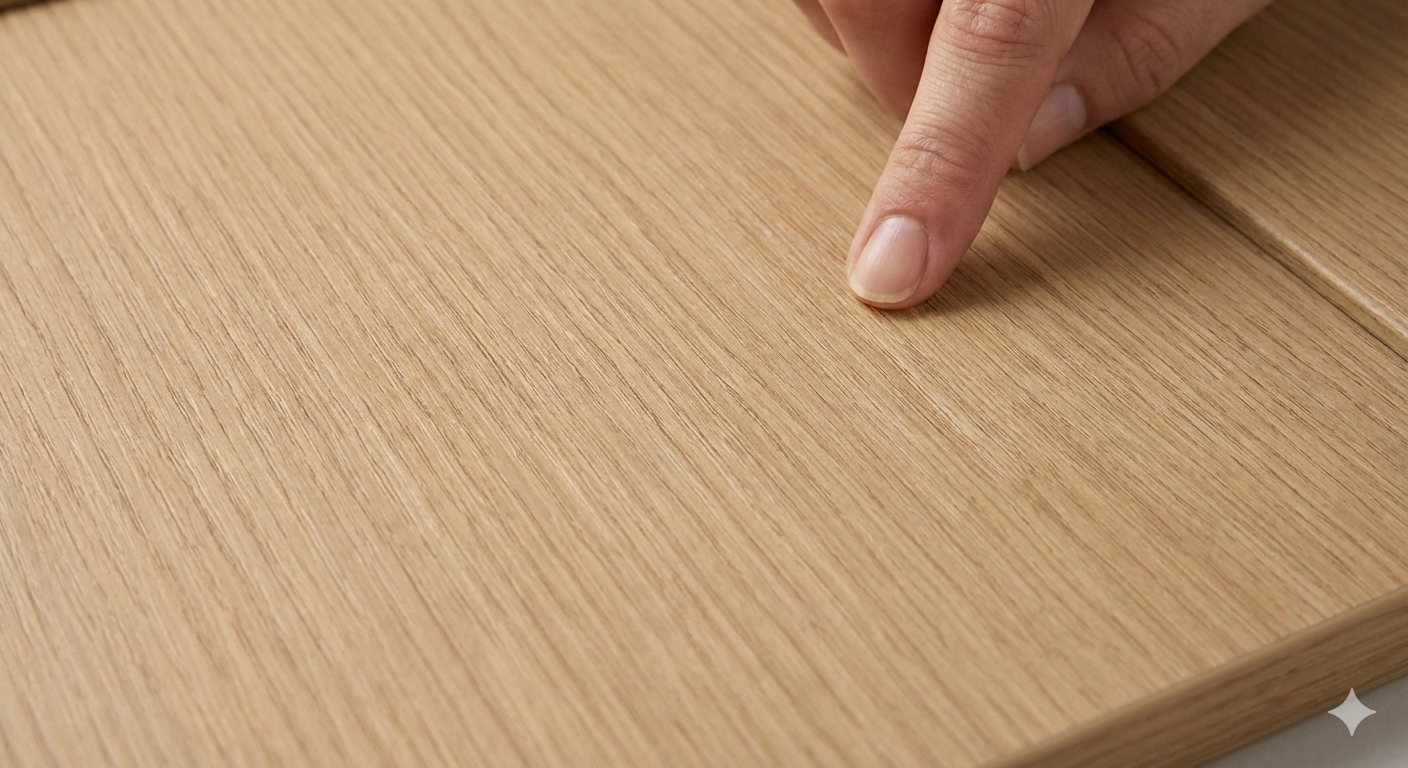
Example of textured melamine material with Rift White Oak design
Veneer: A thin slice of real Rift White Oak is bonded to a stable substrate. You get the authentic look, feel, and grain of the real species, but the substrate prevents the warping and movement that plagues solid wood doors. Because the veneer is sliced from the same log or flitch, color matching across an entire kitchen is far more achievable than with solid lumber.
- The Look: Both options deliver the “Premium” wood aesthetic (see below) without the risk of warping, fading, or color variation. Melamine is flawless and maintenance-free. Veneer is real wood that looks and feels authentic while offering far greater consistency than solid lumber.
- The Reality: You get the “Instagram Perfection” look for half the price of the Premium wood required to match it. These options cost more than Select wood because the engineering and edge-banding technology are world-class, but the result is bulletproof. It is perfection, engineered.
4. Premium “Clear” Grade (Real Wood)
Cost Multiple: 4.0x – 5.0x
This is the true “Instagram” grade using real timber. To achieve this, manufacturers demand “Clear” lumber and then hand-select boards to ensure they are all the exact same shade of wheat-blonde. Any board that is slightly too dark, too light, or has a mineral streak is discarded.
- The Look: Architectural, monolithic, and flawless. Looks great with light or no stains.
- The Reality: It can cost four to five times the price of character grade because of the labor to sort it and the volume of material required to achieve it. It is beautiful, but you are effectively paying for three kitchens’ worth of wood to get one kitchen’s worth of perfection.
The Bottom Line
If you demand visual perfection—where every drawer matches the next—you have a stark choice:
- Pay the 5.0x premium for the manufacturers to hand select the matching pieces.
- Choose a Whole Wood Alternative (2.0x–2.5x), extend your budget and get a product that will look like the Instagram photos that you loved.
If you love the story of the tree—knots, streaks, and all—stick with the Character or Select grades and embrace the variation.
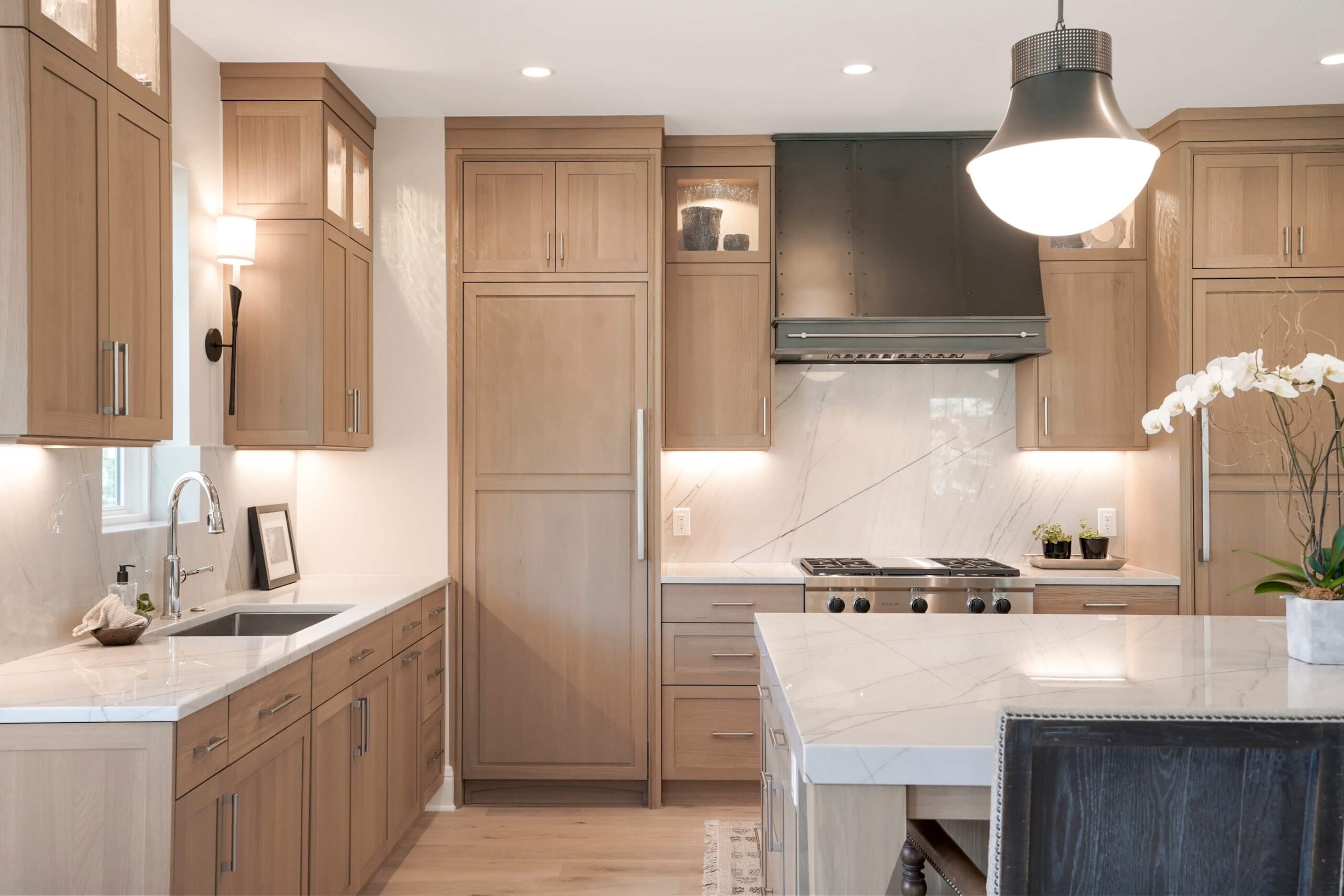
Rift White Oak kitchen by BKC Kitchen and Bath